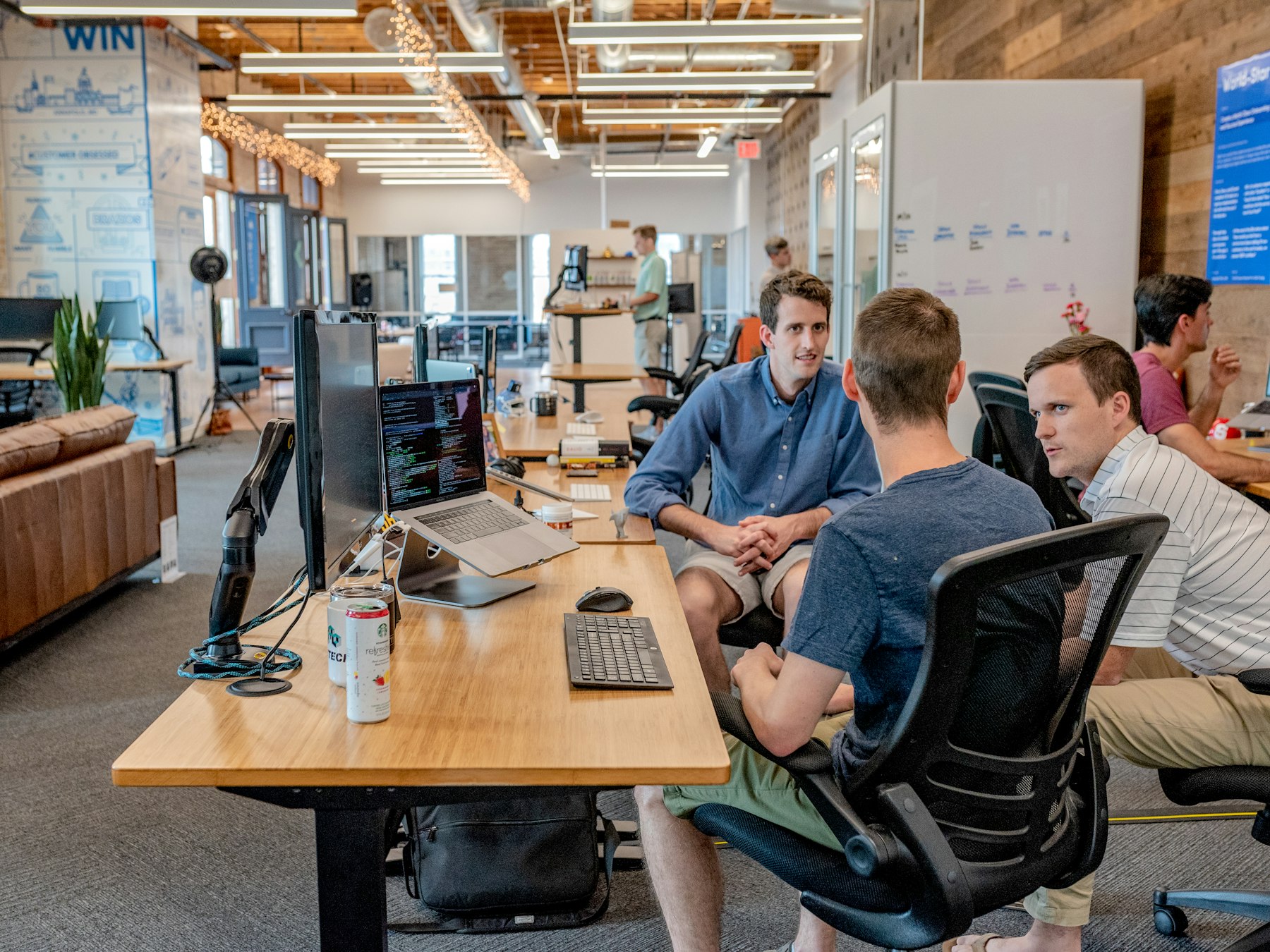
Diversity includes. Inclusion empowers. When we bring everybody in, we do better work — for operators on a Tuesday floor, for teammates who were not in the first meeting, and for customers who will never see our backlog.
We hire for judgment, not sameness. Different backgrounds make stronger systems: they catch failure modes early, question jargon, and notice when a flow quietly excludes someone. Belonging is not a slogan. It is whether someone can raise a concern, disagree without fear, and still ship work they are proud of.
What this looks like
Interview and evaluate for craft and judgment — not pedigree theater.
Design reviews that ask who was not in the room, and what breaks for them.
Plain language in product and docs, so more people can act without a translator for jargon.
Respect as a shared responsibility. Harassment and discrimination are not tolerated.
Innovation
Change what is worth changing.
Invention at Yiheng is not noise. It is the quieter path that removes a step, shortens a failure, or makes a device open to the right policy on the first unlock. We innovate so operators can depend on the stack — not so a release note can sound impressive.
We look before we name a feature. We write the plain version. We take things away until removing one more thing would make the work worse. Motion orients; it does not beg to be watched. Success is what still works a month later.
What this looks like
Prefer one clear path over three clever ones.
Ship the last five percent — the edge cases that make a system trustworthy.
Measure by calm operations, not by demo applause.
Stay after launch: devices drift, menus change, policies need a quieter pass.
Progress that does not exhaust the ground it stands on.
Environment
Care for the places we touch.
Every space we instrument, every device we ship, and every deployment we run leaves a mark. We prefer durable hardware, efficient software, and logistics that do not treat the earth as a free input.
Longevity is an environmental choice. A device that stays useful is better than one that needs replacing for a cosmetic release. We start with decisions we can keep — specify what can be supported, write software that runs calmly on ordinary hardware, and avoid novelty that forces a rip-and-replace on a working site.
What this looks like
Hardware meant to be supported and kept in service.
Software efficient enough for real devices in the field.
Deployments that do not ask the planet to pay for a demo weekend.
Vendors who can speak honestly about materials and waste.
In every decision.
These three values show up in who we interview, which vendors we choose, how long a product is meant to last, and whether a feature earns its place. If a decision fails these tests, we rewrite it.